Insight
The Ultimate Guide to Review Management Tools
Helios Lab

What Is Online Review Management and Why It Matters for Businesses

At its core, review management isn't just about keeping an eye on star ratings—it is a foundational pillar of modern brand equity. Did you know that up to 52% of a company’s market value is directly attributed to its reputation? When prospective buyers search for services, your digital footprint acts as an open window into your operations.
Search engines like Google care deeply about user experience. Because search algorithms aim to serve the most trustworthy local results, your online ratings, review volume, and recency directly influence search rankings and local map pack visibility. If you have an unoptimized profile or neglect incoming feedback, search engines may treat your business as inactive or unvetted. Ensuring your underlying profile is fully set up, such as knowing What is a Google Company Listing and Why Does Your Business Need One, gives search crawlers and human searchers a reliable anchor for your brand.
How Online Customer Feedback Drives Conversion and Revenue
Online feedback acts as authentic social proof that bridges the gap between interest and purchase. An overwhelming 81% of consumers scope out Google reviews to evaluate local businesses before making first contact. When shoppers see real people sharing positive experiences, their buying anxiety vanishes.
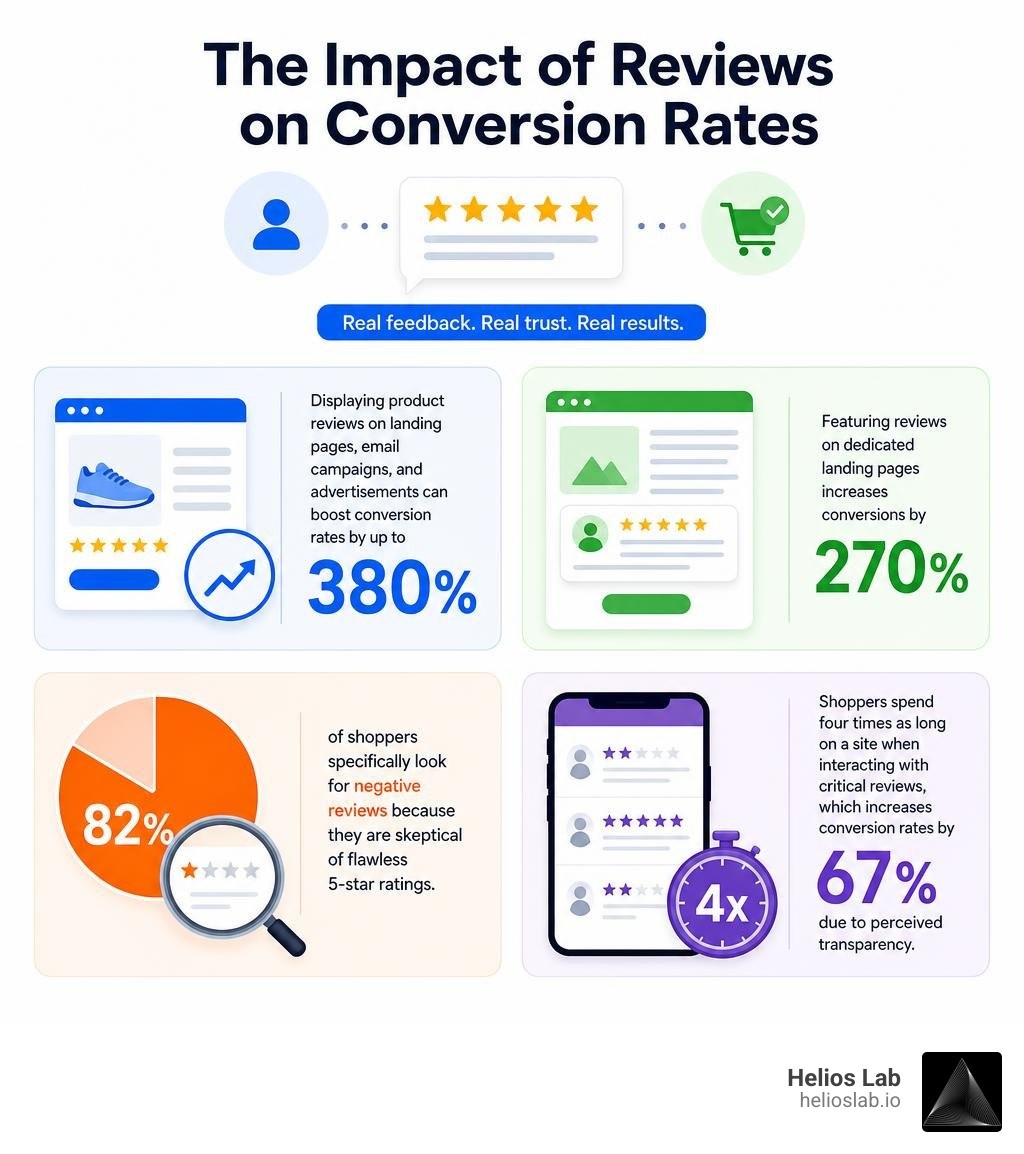
The direct financial impact of showing reviews is massive:
Displaying product reviews on landing pages, email campaigns, and advertisements can boost conversion rates by up to 380%.
Featuring reviews on dedicated landing pages increases conversions by 270%.
Interestingly, 82% of shoppers specifically look for negative reviews because they are skeptical of flawless 5-star ratings.
Shoppers spend four times as long on a site when actively interacting with critical reviews, which ultimately increases conversion rates by 67% due to perceived transparency.
When a brand demonstrates that it has nothing to hide, prospective buyers trust the business far more.
Key Benefits of Automating Modern Review Management
Trying to manually log into dozens of platforms—from Google Business Profile to industry-specific directories—is an absolute nightmare for busy teams. Automating this workflow unlocks immediate operational benefits:
Time Efficiency: Unified inboxing eliminates the chaos of checking ten browser tabs every morning.
Multi-Channel Monitoring: Instant alerts notify your customer service team the second feedback lands on any network.
Real-Time De-escalation: You can catch unsatisfied customers within minutes rather than letting a bad experience fester publicly for weeks.
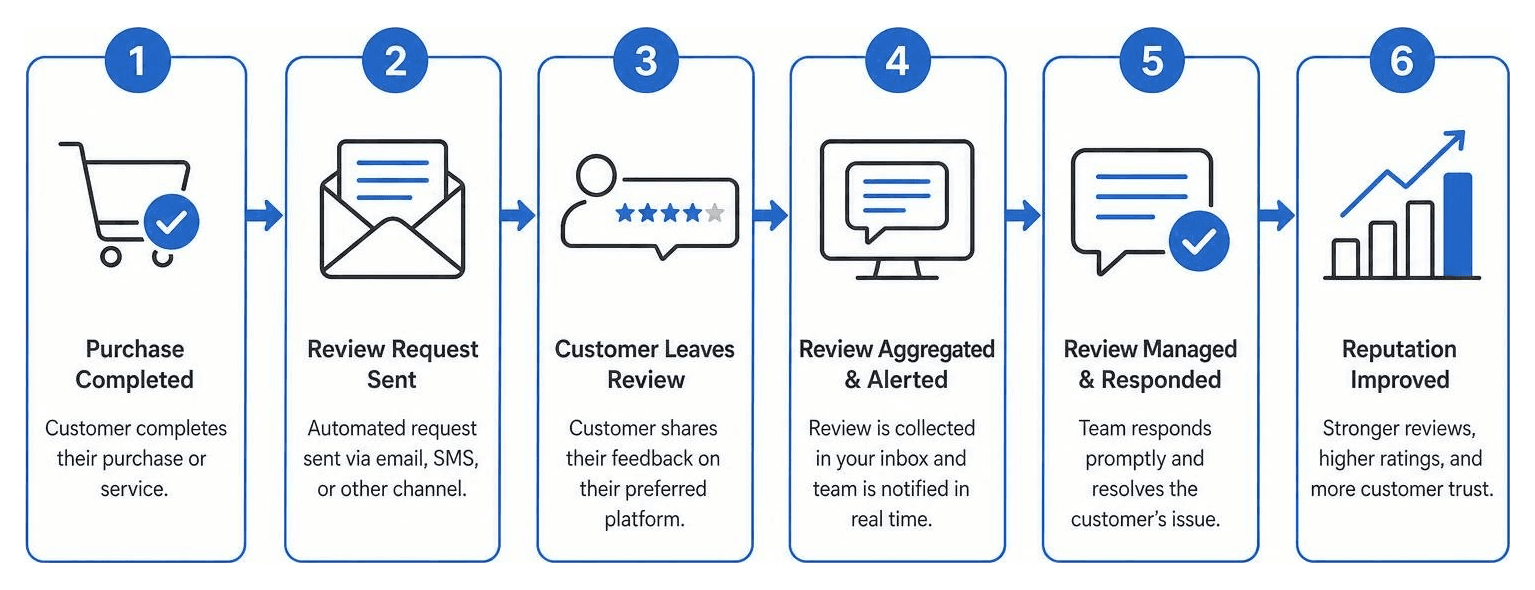
Operational Scaling: Automated post-purchase request sequences mean review collection runs continuously on autopilot.
Essential Features to Look for in Feedback and Reputation Software
When selecting feedback platforms, we look for software that eliminates friction for both your team and your customers.
A high-performing software stack should provide:
Review Collection Automation: Triggers automated requests via SMS or email right after a service call, package delivery, or appointment.
Unified Review Dashboard: Aggregates reviews across major platforms into one manageable feed.
Profile Optimization Tools: Syncs Name, Address, and Phone (NAP) details across directories to keep listings accurate everywhere.
Leveraging AI and Sentiment Analysis in Review Management
Modern tools rely heavily on Natural Language Processing (NLP) and AI-driven sentiment analysis. Rather than simply counting stars, AI dissects the actual words written by customers to highlight hidden trendlines.
AI functionality helps teams by:
Identifying Recurring Themes: Spotting frequent mentions of words like "slow shipping", "friendly front desk", or "confusing bill".
Drafting Instant Contextual Responses: Generating personalized response drafts that customer service reps can review and approve in seconds.
Automating Smart Escalation Rules: Flagging low-rating reviews containing urgent keywords directly to senior managers for immediate intervention.
Centralized Review Monitoring and Multi-Channel Response Hubs
A centralized response hub acts as a single source of truth for your reputation management team. Instead of sharing login credentials for multiple platform accounts across your organization, centralized hubs allow for role-based permissions, internal notes, and clear task delegation.
This ensures protocol compliance, so every response maintains your brand's voice and tone guidelines.
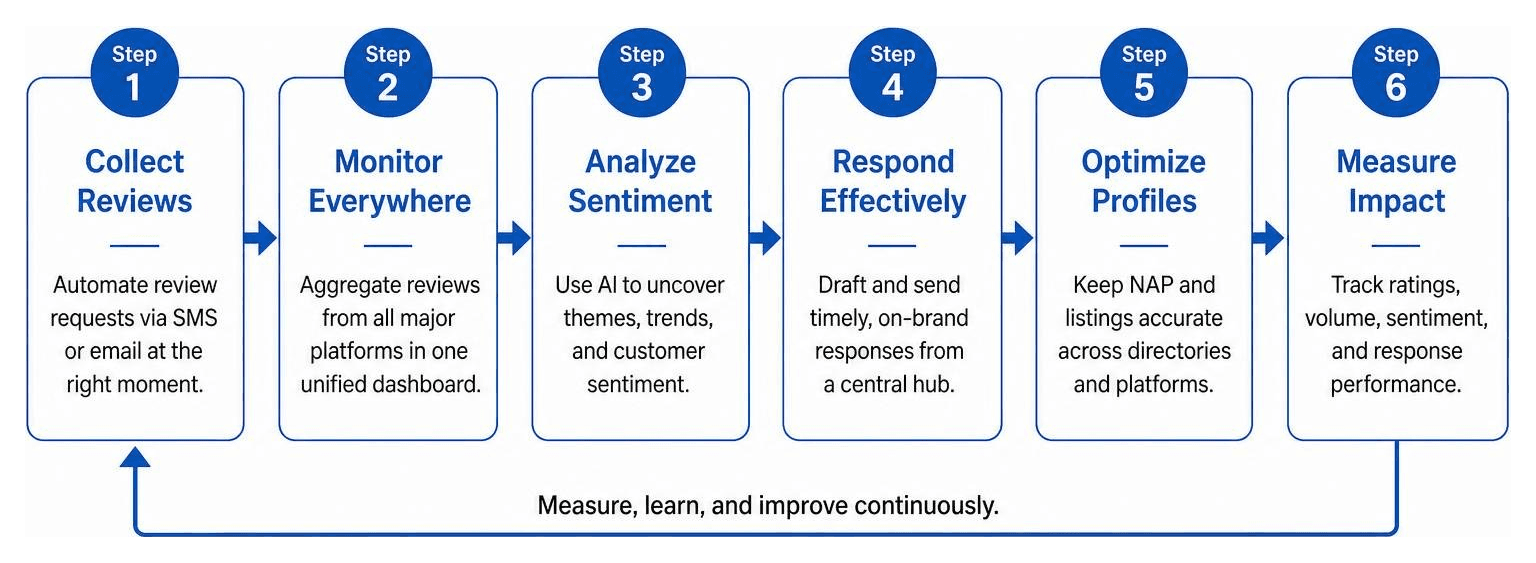
How to Build an Effective Reputation Strategy Step-by-Step
Building a world-class online reputation doesn't happen by accident—it requires a repeatable internal system.

Here is how we recommend structuring your process:
Tactics for Prompting Customers to Leave Authentic Feedback
If you don't ask, you rarely receive. Research shows that 65% of consumers are happy to leave reviews when directly prompted by a business. Furthermore, around 80% of all online reviews originate from post-purchase follow-up emails.
To maximize your response rates, try these practical touchpoints:
Automated Follow-up SMS: Send a polite text prompt within 2 to 24 hours of a completed service while the experience is fresh.
Targeted Post-Purchase Emails: Include direct review links in digital receipts or delivery confirmation messages.
QR Codes on Receipts and Packaging: Print scannable QR codes on physical invoices, table tents, or product inserts leading straight to your review form.
Professional Guidelines for Responding to Positive and Negative Reviews
Responding to reviews is non-negotiable. A striking 90% of consumers report being more likely to patronize a business that actively responds to all reviews, both good and bad.
Follow these response guidelines:
Response Window: Aim to respond within 24 to 48 hours. Over half of online buyers expect a response to negative feedback within a week, and 33% expect a response within three days or less.
Empathy First: 68% of customers expect brands to demonstrate genuine understanding and compassion in public interactions.
De-escalation: For negative reviews, thank the reviewer for their time, acknowledge their frustration, apologize without getting overly defensive, and invite them to resolve the issue privately via phone or email.
Best Practices, Ethical Standards, and Pitfalls to Avoid
Navigating online feedback requires strict adherence to legal standards and platform guidelines. Trying to cheat the system will inevitably backfire.
Category | Do's ✅ | Don'ts ❌ |
|---|---|---|
Review Acquisition | Prompt real customers immediately after positive interactions. | Offer money, gift cards, or discounts in exchange for 5-star reviews. |
Response Strategy | Maintain a professional, empathetic, and constructive tone. | Get defensive, argue, or insult unhappy reviewers publicly. |
Compliance | Comply with FTC guidelines and review platform terms of service. | Gating reviews (filtering unhappy customers away from public sites). |
Internal Workflow | Use AI to draft responses and highlight sentiment trends. | Post fake reviews using employee accounts or paid bot services. |
Spotting and Flagging Fake Reviews Correctly
Fake or malicious reviews can unfairly damage your local standing. While you cannot simply delete a customer review because it is critical, platforms do permit flagging feedback that clearly violates community guidelines (such as hate speech, spam, off-topic rants, or obvious fake accounts from competitors).
For step-by-step advice on taking charge of your local search presence, learn more about Taking Control of Customer Reviews with a Google Review Management Tool.
When flagging fraudulent reviews:
Document evidence proving the reviewer was never a customer (e.g., cross-referencing CRM records).
Submit a formal dispute request through the platform's official reporting protocol.
Follow up regularly while keeping a calm, polite public response on the profile explaining that you have no record of their transaction.
Utilizing Customer Feedback to Enhance Operations and Products
Reviews are an incredible source of free operational intelligence. By using text analytics on aggregated reviews, businesses can spot systemic operational bottlenecks:
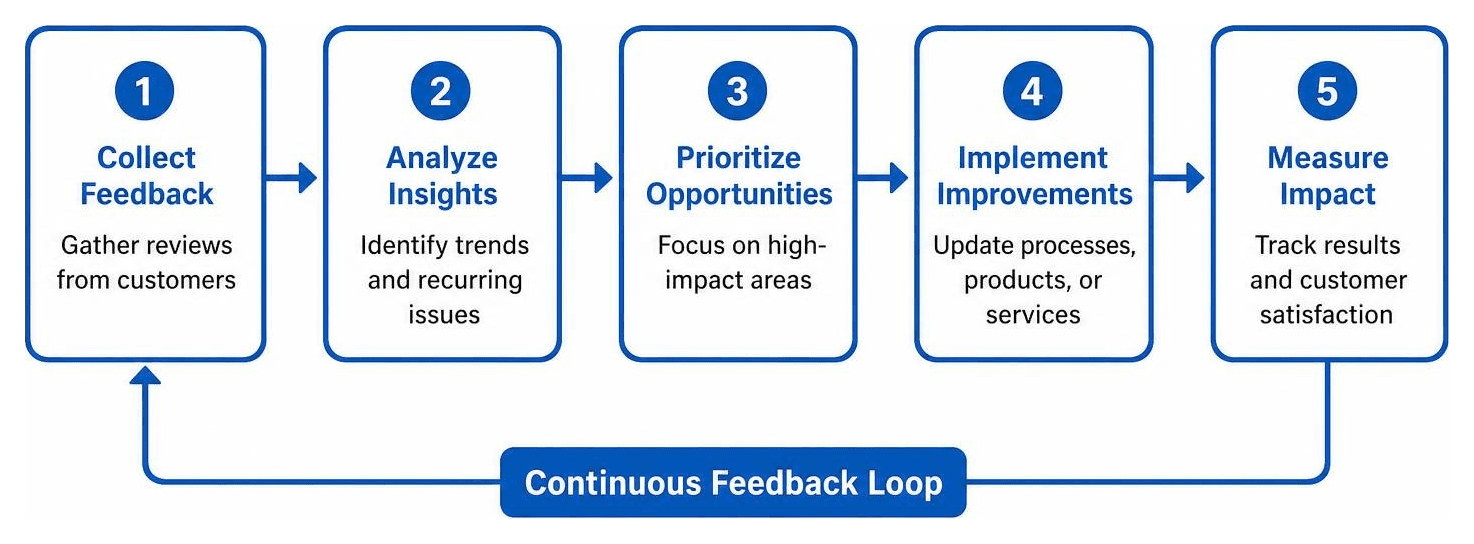
Monitoring competitor reviews is another clever tactic. By analyzing what customers complain about when dealing with competitors in your market, you can adjust your own offerings to fill those service gaps.
Frequently Asked Questions About Online Feedback
How fast should a business respond to negative online reviews?
We recommend responding to negative reviews within 24 to 48 hours. Over 50% of consumers expect a response within a week, and one-third expect an answer in three days or less. Responding quickly demonstrates to both the unhappy reviewer and potential prospective clients that you take customer satisfaction seriously.
Can a business legally remove negative Google or Yelp reviews?
A business cannot legally or technically delete a legitimate negative review simply because they disagree with the customer's opinion. However, you can request platform removal if the review violates platform policies—such as containing offensive language, posting false information, presenting a clear conflict of interest, or representing spam.
What is the average ROI of using reputation management software?
Reputation management software delivers exceptional financial returns. Industry research shows that nearly 95% of companies using reputation management software easily cover the platform's cost through direct ROI—driven by higher local search rankings, increased conversion rates, and better customer retention.
Conclusion
Building brand credibility requires consistency, transparency, and a continuous commitment to customer satisfaction. By adopting modern review management strategies, responding with empathy, and leveraging customer feedback to refine your operations, you turn everyday reviews into a powerful driver of long-term business growth.
At Helios Lab, we specialize in helping businesses dominate local search and capture market authority through dedicated SEO and digital growth strategies. Explore our full range of solutions on the Helios Lab homepage, check out our latest guides on our Blog, or reach out directly on our Contact page to elevate your business's online search presence today.