Insight
8 Pest Control Promotional Ideas That Drive Leads
Helios Lab

A discount by itself rarely moves a pest control buyer. Homeowners usually want a fast answer, a trusted provider, and a clear path from search to booking, especially when the problem feels urgent or recurring. The strongest pest control promotional ideas tie a specific business outcome to a specific acquisition channel, so the offer helps a prospect decide faster and helps the operator measure what produced calls.
That matters because pest control search traffic is already highly commercial. One 2026 benchmark set reports a 5.54% click-through rate and a 15.52% conversion rate for pest control search ads, both stronger than the wider home-services average cited in the same benchmark set, which supports direct-response offers rather than broad awareness plays. Pest control is also expensive to buy in search, with one benchmark citing a $7.85 CPC and $90.92 cost per lead (CallRail benchmark, WebTonic benchmark).
So the better question isn't “What promotion sounds attractive?” It's “What promotion solves the problem that's blocking the call, the map-pack click, or the booking?” The eight ideas below are organized that way, by the business problem they solve. Choose based on your service mix, seasonality, location count, reputation strength, and how well you can track rankings, map-pack visibility, calls, and lead quality.
Table of Contents
1. Google Business Profile Optimization and Review Generation Bundle
3. Franchise and Multi-Location Map Pack Domination Campaign
4. High-Authority Backlink Outreach and Thought Leadership Package
5. Emergency and Seasonal Campaign Promotions Tied to SEO Performance
6. Free Diagnostic Audit and Performance Guarantee Promotion
7. Review Response and Reputation Management Certification Program
1. Google Business Profile Optimization and Review Generation Bundle
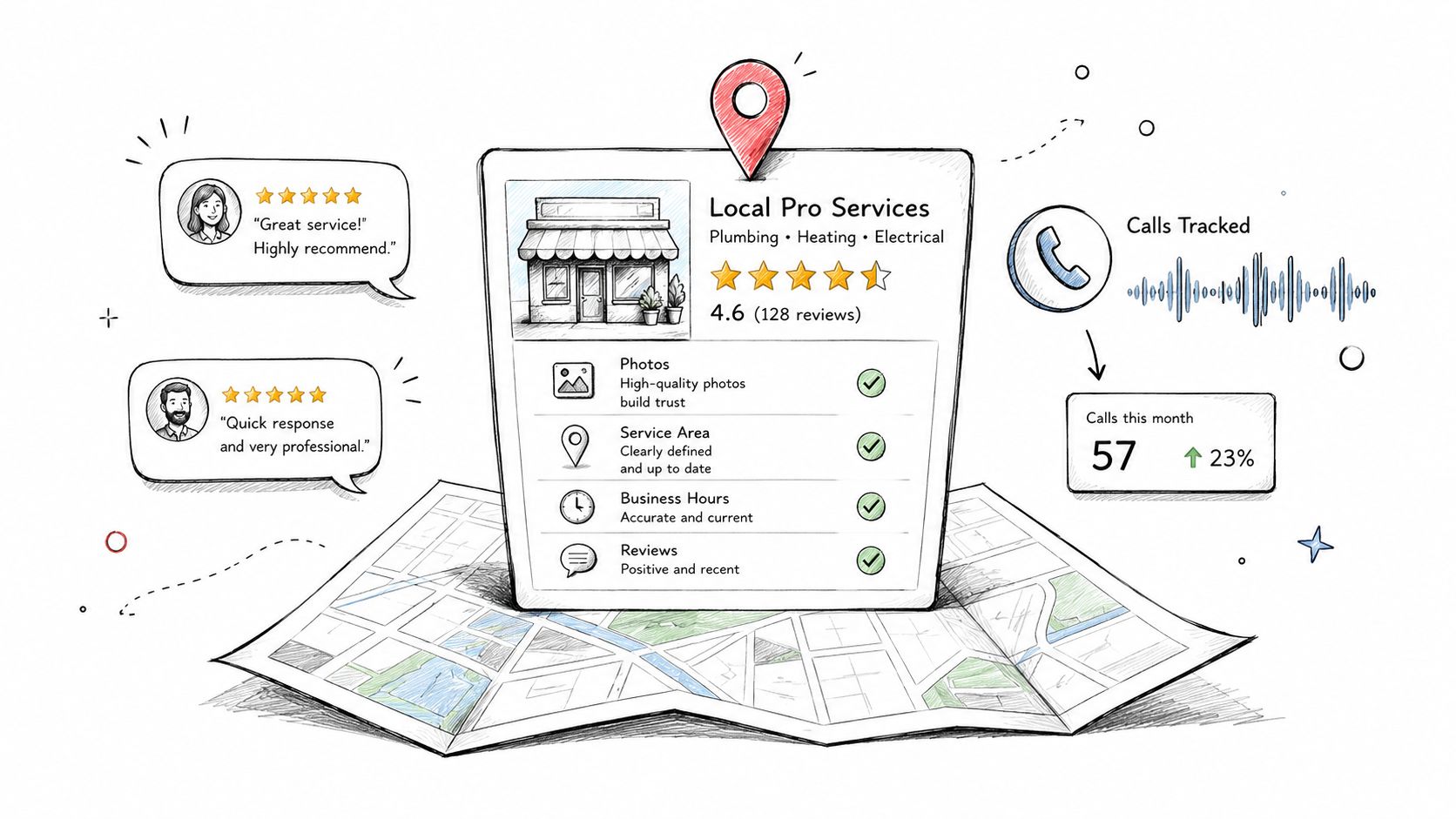
A lot of pest control companies try to buy visibility with ads before they fix the profile that decides whether a searcher trusts them enough to call. A bundled promotion built around Google Business Profile optimization and structured review generation solves that bottleneck first. It fits service-area searches like termite control, rodent removal, and emergency pest treatment because map-pack placement often decides who gets the call before the website is even opened.
Package it as a ranking-and-call offer
Lead with the business outcome, not the number of reviews. A stronger pitch is “improve map-pack inclusion and call volume in your service area” than “get more reviews,” because owners buy revenue access, not vanity metrics. For a local shop, a starter bundle can include monthly GBP optimization, review request workflows, and photo updates, while a premium version adds competitor monitoring and reputation tracking.
Practical rule: if the profile doesn't look trustworthy on mobile, the ad budget will leak. Most homeowners will move on before they ever reach the website.
The trade-off is that review work is slower than paid search. That's why this bundle works best as a 3 to 6 month engagement, not a one-week fix. It also pairs naturally with a free GBP audit, because an audit shows the gap before you ask for commitment.
For operators who want a deeper system for review workflows, the practical mechanics are laid out in Helios Lab's review management tools guide. Use it as the operational backbone for the bundle, then measure success through map-pack visibility, branded search clicks, and calls from service-area keywords rather than review count alone.
2. Local Content and AI Search Visibility Bundle
The problem here isn't just ranking. It's being discoverable when homeowners ask conversational questions in search or in AI assistants, then guiding them to a booking page instead of a generic blog post. This bundle solves the “we have good services, but nobody finds us for the exact problem they're describing” issue.
Build around the questions homeowners actually ask
The best angle is education-led promotion. Mintel's market coverage says growth is being driven by the shift toward year-round pest prevention, along with climate patterns, health concerns, and younger homeowners discovering providers through search rather than referrals (Mintel market report). That makes content around hidden risks, recurring treatment value, and prevention-versus-emergency decisions more useful than a stack of seasonal sales posts.
A practical content package starts with high-intent topics like termite control, bed bug removal, rodent extermination, and cockroach treatment, then layers in city or neighborhood modifiers. A pillar page can explain a service in full, while supporting location pages answer the same need in specific markets. Schema markup such as LocalBusiness, Service, FAQPage, and Article helps search systems understand the page structure.
Homeowners don't want a blog that “markets.” They want a page that answers the exact problem, in their city, with enough confidence to call.
The trade-off is that this takes longer than promotions built only for paid ads. It works best as a 12-month growth program, because content compounds when it's refreshed and linked properly. Measure it with rankings for commercial-intent terms, organic calls, branded search growth, and whether AI-assisted discovery surfaces your brand in answer-style queries.
For pest control companies with multiple service areas, this bundle is strongest when content production is tied to local demand signals and quarterly refreshes, not one-off publishing bursts.
3. Franchise and Multi-Location Map Pack Domination Campaign
Single-location operators often chase one neighborhood at a time. Multi-location pest control brands have a different problem, they need consistency across many service areas without creating a mess of duplicate listings, uneven reviews, or conflicting citations. This campaign solves that scale problem by unifying GBP optimization, citations, reviews, and local content across every branch.
Standardize the local system
The point of a multi-location promotion is not just ranking, it's control. A franchise owner wants the same brand promise in every market, but local search still rewards location-specific relevance. That means each branch needs its own profile hygiene, its own review rhythm, and its own service-area content, all managed under one reporting structure.
For a chain with 5 locations, the campaign can be straightforward. For 25 or more, the offer should be framed as a done-for-you operating system that reduces admin burden for the franchise team. The pricing model usually makes more sense as a base fee per location with volume tiers, because the work scales with the number of profiles, pages, and markets.
Practical rule: multi-location SEO fails when central marketing owns the strategy but local teams own none of the execution.
Measure success by location-level map-pack inclusion, call metrics by branch, and keyword consistency across the portfolio. That tells you where the brand is winning and where a location needs more reviews, better category alignment, or stronger local content.
For pest control franchises, the strongest version of this promotion includes quarterly benchmarking reports that compare each branch's visibility and lead quality. That turns a vague “SEO program” into a management tool, which is what franchise operators need.
If you want a deeper explanation of the mechanics behind map-pack performance, Helios Lab's Google Map Pack guide is the right internal reference point to pair with this bundle.
4. High-Authority Backlink Outreach and Thought Leadership Package
A pest control company in a crowded market often has decent service quality but weak authority signals online. That's the business problem this package solves. It positions the brand as an expert through placements on reputable publications, then uses those mentions to strengthen trust and visibility over time.
Sell authority, not just links
The right offer here is a content and outreach program, not a backlink-shopping exercise. Publications want seasonal tips, prevention guides, regulatory updates, and expert commentary on common pest patterns. Pest control businesses can provide all of that if they have someone willing to speak with enough specificity about real-world problems.
The most effective outreach targets are topical, not random. Home-maintenance sites, local business publications, and pest-control-adjacent outlets usually make more sense than broad directories. Founder bylines and technician expertise help, because publications are more likely to publish content that sounds like it came from someone who handles infestations, inspections, and treatments.
A useful package pairs thought leadership with internal promotion. When a placement goes live, share it in email, on social channels, and in client resources so the brand gets more than one touchpoint from the effort. That makes the link earn its keep as both an authority signal and a credibility asset.
The mistake is treating backlinks like a technical trick. The real value is that third-party editorial context makes the business easier to trust before the first call.
Measure referrals, branded search behavior, and which placements produce qualified leads. Some publications attract traffic but not buyers. Others generate fewer visits and better calls. The operator should know the difference before ordering a second round of outreach.
For agencies or in-house teams that need a repeatable way to source placements, Helios Lab's local business backlink guide) is the relevant operational reference to connect outreach with measurable authority building.
5. Emergency and Seasonal Campaign Promotions Tied to SEO Performance
Pest control demand isn't flat. Termites, mosquitoes, rodents, and bed bugs create different urgency windows, and the promotional idea that solves the wrong season will waste budget. This campaign works because it packages SEO with seasonal demand, so the promotion lands when the need is already rising.
Match the offer to the pest and the calendar
A spring termite campaign should not look like a winter rodent campaign. The keyword set, landing page copy, GBP messaging, and call-to-action should all reflect the specific problem the homeowner is trying to solve right now. That's also where limited-time pricing can help, because urgency is believable when the season itself is part of the story.
The strongest version starts early. Ranking accumulation takes time, so the content and landing pages should be prepared well before the peak demand window. Emergency-focused pages should also be built for “near me” and “now” searches, with obvious call buttons and response-time language for people who aren't browsing, they're trying to get help.
Seasonal promotion works when the message, page, and call workflow all point to the same outcome. If the ad promises speed but the phone rings twice before someone answers, the campaign burns trust.
Track this through calls, bookings, and seasonal keyword movement rather than just traffic. A summer mosquito offer might generate strong interest but weak close rates if the service area, pricing, or schedule doesn't match local demand patterns. In that case, the problem is not the promotion itself, it's the follow-up.
This idea is especially useful for businesses that want a stronger off-season pipeline too. Seasonal pages can be repurposed into educational content and retention messaging when peak demand fades, which keeps the search footprint alive year-round instead of going dark after the rush.
6. Free Diagnostic Audit and Performance Guarantee Promotion
A lot of pest control owners have been burned by vague marketing promises. A free diagnostic audit solves that skepticism because it shows what's broken before anyone asks for a contract. The performance guarantee then reduces perceived risk by tying the offer to controllable outcomes like rankings or map-pack placement.
Make the audit the product entry point
The audit should read like a strategic roadmap, not a competitor scorecard. Show the owner where the visibility gaps are, which locations need attention, and what would change if the business improved search presence in its core service areas. The result is a more concrete buying conversation, because the prospect can see the path instead of hearing a generic sales pitch.
A guarantee works best when it is conservative and specific. It should be based on realistic timelines and outcomes the provider can influence, such as top-5 rankings for selected terms or stronger map-pack coverage. Guarantees tied to call volume are harder to control, because staffing, pricing, reputation, and seasonality all influence conversion after the click.
Practical rule: guarantee what you can steer, not what the market ultimately decides.
The trade-off is that this promotion attracts more serious buyers, but fewer casual ones. That is usually a good thing for pest control, because the most qualified prospects want evidence before they commit. It also creates a natural follow-up window, since the audit can be valid for a limited period and then converted into a locked-in proposal.
Use the audit as a lead magnet in paid search and email, then measure conversion from audit request to contract. That tells you whether the offer is doing the job of lowering resistance, which is the purpose of the promotion.
7. Review Response and Reputation Management Certification Program
This promotion solves a trust problem, not a traffic problem. Pest control buyers often check ratings, recent feedback, and response quality before they ever call, so a certification program around review response and reputation management can become a real sales asset. It gives the business a visible standard for handling complaints, service issues, and praise.
Turn reputation into a documented process
The strongest version includes review audits, response templates, staff training, and a certification badge that can be placed on the website and GBP profile. That badge does more than decorate a page, it signals that the company has a process for handling customer feedback instead of improvising after a bad review appears.
The workflow should be simple enough for staff to use under pressure. Review alert, response within 24 hours, escalation if needed, and a defined path for complex complaints keeps the brand from sounding defensive or disorganized. Pest control-specific scenarios matter here, because customers often complain about follow-up visits, treatment timelines, or pricing clarity.
A certification program also supports recurring revenue. Annual renewal training, updated response templates, and platform refreshes can be packaged as an ongoing service instead of a one-time setup. That is useful for local brands that need consistent handling across technicians or office teams.
A reputation program only works if the front desk and the field team both know what happens after a review goes live.
Measure the program through response speed, review recency, and whether more prospects mention trust before booking. This is especially valuable in markets where many competitors look similar on paper. In those markets, the business that responds well and looks organized often earns the call.
8. Case Study and ROI Documentation Showcase Campaign
Some pest control promotions fail because the buyer cannot picture the outcome. This campaign solves that by showing real examples, real timelines, and real search outcomes from existing clients. It turns SEO and local visibility into something tangible instead of theoretical.
Make proof the promotion
The best case study format is simple. Start with the client's challenge, show the strategy, document the month-by-month progress, and finish with the measurable result. That structure makes it easy for a prospect to compare their own situation against a similar business and decide whether the service is worth pursuing.
Case studies work especially well when they include rankings, map-pack placement, call volume, and lead quality. Those are the metrics owners care about because they connect directly to booked jobs. If the market is competitive, showing a difficult win is often more persuasive than showing an easy one.
Use a few different outcome tiers so the library feels credible. Quick wins help with urgency, sustained growth helps with retention, and longer-term improvements help justify a larger SEO commitment. Updated quarterly, the library also becomes a sales tool for staff who need proof during live conversations.
Practical rule: if the result can't be explained in numbers the owner recognizes, it won't sell as hard as it should.
The trade-off is that case study production takes discipline. You need client permission, reporting clarity, and a plan for keeping the story current. But once the system is in place, it becomes one of the most useful promotions in the business because it removes uncertainty before the first proposal is signed.
Comparison of 8 Pest Control Promotion Strategies
Offer | Implementation (🔄) | Resources (⚡) | Expected Outcomes (⭐📊) | Ideal Use Cases (💡) | Key Advantages |
|---|---|---|---|---|---|
Google Business Profile Optimization + Review Generation Bundle | 🔄 Medium, ongoing GBP edits + automated review workflows | ⚡ Moderate, GBP tools, review automation, call-tracking | ⭐ Improved map-pack visibility; 📊 ↑ calls and measurable ROI within 3–6 months | 💡 Local home‑service and pest control operators seeking map-pack gains | Addresses top local ranking factors; measurable call attribution; reduces review management friction |
Local Content + AI Search Visibility Bundle | 🔄 High, monthly content production + AI engineering | ⚡ High, writers, SEO, AI tools, schema implementation | ⭐ Broader organic + AI citations; 📊 faster visibility and improved lead quality over months | 💡 Multi‑location businesses without in‑house content teams; targeting commercial intent | Multi‑surface visibility (Search, Maps, AI); supports snippets and AI citations |
Franchise/Multi-Location Map Pack Domination Campaign | 🔄 High, centralized setup, citation standardization per location | ⚡ High, dashboard, citation services, dedicated account team | ⭐ Consistent map‑pack dominance across locations; 📊 scalable rank improvements | 💡 Franchises and multi‑location operators (5–50+ locations) | Ensures NAP consistency at scale; speeds ranking for new locations; centralized reporting |
High-Authority Backlink Outreach + Thought Leadership Package | 🔄 Medium‑High, outreach + bespoke content placement | ⚡ Moderate‑High, outreach team, content creators, PR relationships | ⭐ Domain authority & E‑E‑A‑T gains; 📊 durable ranking lifts (8–12+ weeks) | 💡 Brands in saturated local markets seeking authority differentiation | Lasting authority signals; referral traffic; strong competitive differentiation |
Emergency/Seasonal Campaign Promotions Tied to SEO Performance | 🔄 Medium, seasonal keyword/content calendar + landing pages | ⚡ Moderate, seasonal content, landing pages, ad copy, tracking | ⭐ High conversion during peaks; 📊 measurable seasonal revenue uplifts | 💡 Pest control businesses with predictable seasonal spikes and emergency services | Aligns SEO with revenue cycles; maximizes conversion for peak‑intent queries |
Free Diagnostic Audit + Performance Guarantee Promotion | 🔄 Medium, comprehensive audit + guarantee clauses | ⚡ Moderate‑High upfront, audit analysts, dashboard setup | ⭐ Low‑friction lead generation; 📊 higher conversion if guarantees realistic | 💡 Small businesses unsure about SEO ROI; new market entrants | Lowers buyer risk; provides a clear roadmap; differentiates sales offer |
Review Response + Reputation Management Certification Program | 🔄 Medium, audit, training, certification upkeep | ⚡ Moderate, training resources, monitoring tools, ongoing management | ⭐ Improved review metrics and trust; 📊 better review velocity and response times | 💡 Service businesses reliant on trust; locations needing standardized processes | Builds customer trust; creates recurring training revenue; supports premium positioning |
Case Study + ROI Documentation Showcase Campaign | 🔄 Medium, data collection, case study production, ROI tools | ⚡ Moderate, analytics, content/video production, client coordination | ⭐ Increased qualified inbound leads; 📊 stronger conversions via transparent proof | 💡 Agencies targeting skeptical prospects and franchise decision‑makers | Tangible social proof; interactive ROI calculator; strong sales enablement asset |
Turn the Strongest Idea Into a Measurable Campaign
The best promotion depends on the bottleneck. If the business needs urgent calls, seasonal campaigns and fast-response landing pages usually matter most. If the problem is trust, review generation and reputation management should come first. If the company operates across multiple locations, map-pack consistency and local content coordination usually create the biggest lift in visibility.
Choose one idea based on urgency, seasonality, location count, reputation strength, and content capacity. Then define the offer, the audience, the channel, the conversion action, the tracking method, and the review date before launch. That keeps the promotion tied to a business outcome instead of a vague marketing activity.
For many pest control operators, the smartest first move is the one that closes the widest gap. A business with weak Google visibility and few reviews should start with GBP and reputation. A brand with solid local credibility but thin authority should lean into content, backlinks, and proof-driven case studies. A multi-location operator should focus on standardization and reporting across branches before scaling new offers.
Helios Lab is relevant for businesses that need done-for-you local SEO, AI-oriented content, backlink outreach, or transparent rank and call reporting. A free diagnostic audit can help identify which starting point fits the current bottleneck and which channel is most likely to produce booked jobs, not just clicks.
If you want help choosing the right pest control promotion for your market, Helios Lab can audit your local visibility, identify the fastest path to more calls, and build the SEO, content, and backlink work needed to support it. Start with a diagnostic audit if you want a practical plan for rankings, map-pack presence, and lead quality before you spend more on promotion.